




Introduction
Cybersecurity programs often focus on protecting networks, applications, and devices—but attackers frequently target something much harder to secure: people.
Social engineering attacks use psychological manipulation to trick individuals into revealing information, granting access, or taking actions that compromise security. These attacks remain one of the most common methods used in real-world breaches because they exploit human behavior rather than technical vulnerabilities.
Social engineering testing helps organizations understand how employees respond to realistic attack scenarios by simulating techniques used by cybercriminals.
Through controlled exercises such as phishing simulations, vishing tests, and physical security assessments, organizations can identify human risk, improve security awareness, and strengthen their overall cybersecurity posture.
For a broader overview of offensive security assessments, see our complete guide to penetration testing.
What Is Social Engineering Testing?
Social engineering testing is a security assessment that evaluates how effectively an organization's employees can recognize and respond to manipulation-based attacks.
Instead of targeting software vulnerabilities or network weaknesses, social engineering testing focuses on human interactions.
Ethical security professionals simulate real-world attack techniques to determine whether employees might:
- Click malicious links
- Reveal sensitive information
- Share credentials
- Allow unauthorized access
- Bypass security procedures
The goal is not to punish employees or identify individuals who make mistakes. The purpose is to understand organizational risk and provide opportunities for security improvement.
Why Do Attackers Use Social Engineering?
Technology defenses have improved significantly, but attackers continue to rely on social engineering because people remain a critical part of every security environment.
A successful social engineering attack can provide attackers with:
- User credentials
- Access to internal systems
- Sensitive business information
- Financial access
- Entry into restricted facilities
Attackers often use social engineering because it can bypass technical controls.
For example:
A company may have strong email security protections, but an employee who willingly provides their password to an attacker can unintentionally bypass those defenses.
Common Types of Social Engineering Testing
Organizations may perform several types of social engineering assessments depending on their security goals.
Phishing Simulations
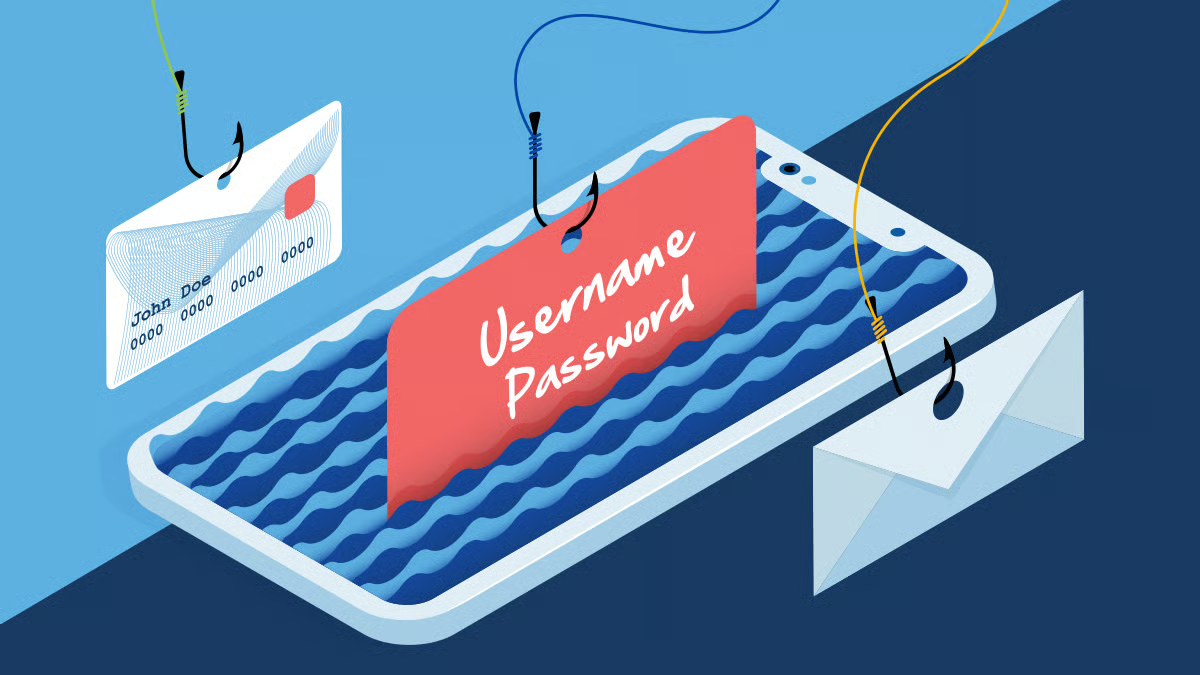
Phishing simulations test how employees respond to fraudulent emails designed to mimic real attacks.
A controlled phishing campaign may evaluate whether employees:
- Click suspicious links
- Open attachments
- Submit credentials
- Report suspicious messages
Common phishing scenarios include:
- Fake password reset requests
- Invoice fraud attempts
- Executive impersonation
- Account verification requests
- Security alert notifications
The results help organizations understand employee awareness and identify opportunities for additional training.
Spear Phishing Testing
Spear phishing is a more targeted form of phishing that focuses on specific individuals or departments.
Unlike generic phishing emails, spear phishing messages may include:
- Employee names
- Company details
- Industry-specific information
- Relevant business context
These attacks are more difficult to identify because they appear more personalized.
Testing can help determine whether employees can recognize sophisticated attack attempts.
Vishing Testing (Voice Phishing)
Vishing uses phone calls or voice communication to manipulate individuals.
Examples include attackers pretending to be:
- IT support personnel
- Vendors
- Executives
- Financial departments
A vishing assessment may test whether employees verify requests before sharing information or performing sensitive actions.
Smishing Testing (SMS Phishing)
Smishing uses text messages to trick individuals into taking actions such as:
- Clicking malicious links
- Providing account information
- Downloading malicious applications
As mobile communication becomes more common, smishing has become an increasingly popular attack method.
Physical Social Engineering Testing
Physical social engineering evaluates whether attackers could gain unauthorized physical access to facilities.
Examples include:
- Tailgating behind employees
- Impersonating vendors
- Attempting to access restricted areas
- Leaving unauthorized devices
Physical testing helps organizations evaluate security procedures beyond digital controls.
What Happens During a Social Engineering Test?
A typical social engineering assessment includes several phases.
1. Planning and Scoping
Before testing begins, organizations define:
- Approved testing methods
- Target groups
- Rules of engagement
- Acceptable boundaries
Clear planning ensures testing is conducted ethically and safely.
2. Reconnaissance
Security professionals gather publicly available information that attackers commonly use.
This may include:
- Company websites
- Social media profiles
- Public employee information
- Business relationships
This demonstrates how attackers build convincing campaigns.
3. Attack Simulation
The testing team conducts controlled simulations.
Examples:
- Sending phishing emails
- Conducting phone-based tests
- Performing physical assessments
Results are tracked to measure organizational response.
4. Reporting and Recommendations
Organizations receive a report outlining:
- Testing methodology
- Employee response rates
- Attack scenarios used
- Identified risks
- Security improvement recommendations
What Does Social Engineering Testing Measure?
Social engineering testing helps organizations understand:
Employee Awareness
Are employees able to identify suspicious requests?
Security Culture
Do employees follow security procedures?
Reporting Behavior
Do employees report suspicious activity quickly?
Process Effectiveness
Are business processes designed to prevent fraud and unauthorized access?
Social Engineering Testing vs Security Awareness Training
These activities are closely related but serve different purposes.
Security Awareness TrainingSocial Engineering TestingEducates employeesMeasures employee responseProvides security guidanceSimulates real attacksBuilds awarenessIdentifies risk areasPreventative approachValidation approach
The strongest programs combine both:
- Train employees on security best practices.
- Test understanding through realistic simulations.
- Improve training based on results.
How Often Should Organizations Perform Social Engineering Testing?
Testing frequency depends on organizational risk and industry requirements.
Many organizations perform:
- Annual phishing simulations
- Periodic awareness testing
- Testing after security incidents
- Additional exercises for high-risk departments
Organizations handling sensitive information may benefit from more frequent testing.
How Organizations Can Reduce Social Engineering Risk
Organizations can improve resilience by:
Implementing Security Awareness Training
Employees should understand:
- Common attack techniques
- How to verify requests
- How to report suspicious activity
Strengthening Email Security
Organizations should implement controls such as:
- Email filtering
- Domain protection
- Multi-factor authentication
- User reporting tools
Creating Clear Procedures
Employees should know how to handle:
- Financial requests
- Password resets
- Vendor communications
- Sensitive information requests
Conclusion
Social engineering testing helps organizations identify how attackers could exploit human behavior to gain access to sensitive information and systems. By simulating realistic phishing, vishing, and physical security scenarios, businesses can better understand their human risk.
Technology alone cannot prevent every cyberattack. Building a security-aware workforce and regularly testing employee readiness are essential components of a mature cybersecurity program.
Framework Security helps organizations evaluate human risk through social engineering testing designed to identify weaknesses, improve awareness, and strengthen overall security defenses.


Talk With A Cybersecurity Expert
Bring the deadline you're staring at, the framework you're being held to, and the team you have. In 30 minutes we'll tell you honestly whether we're the right fit — and if we are, what the first two weeks look like.
Book a working session