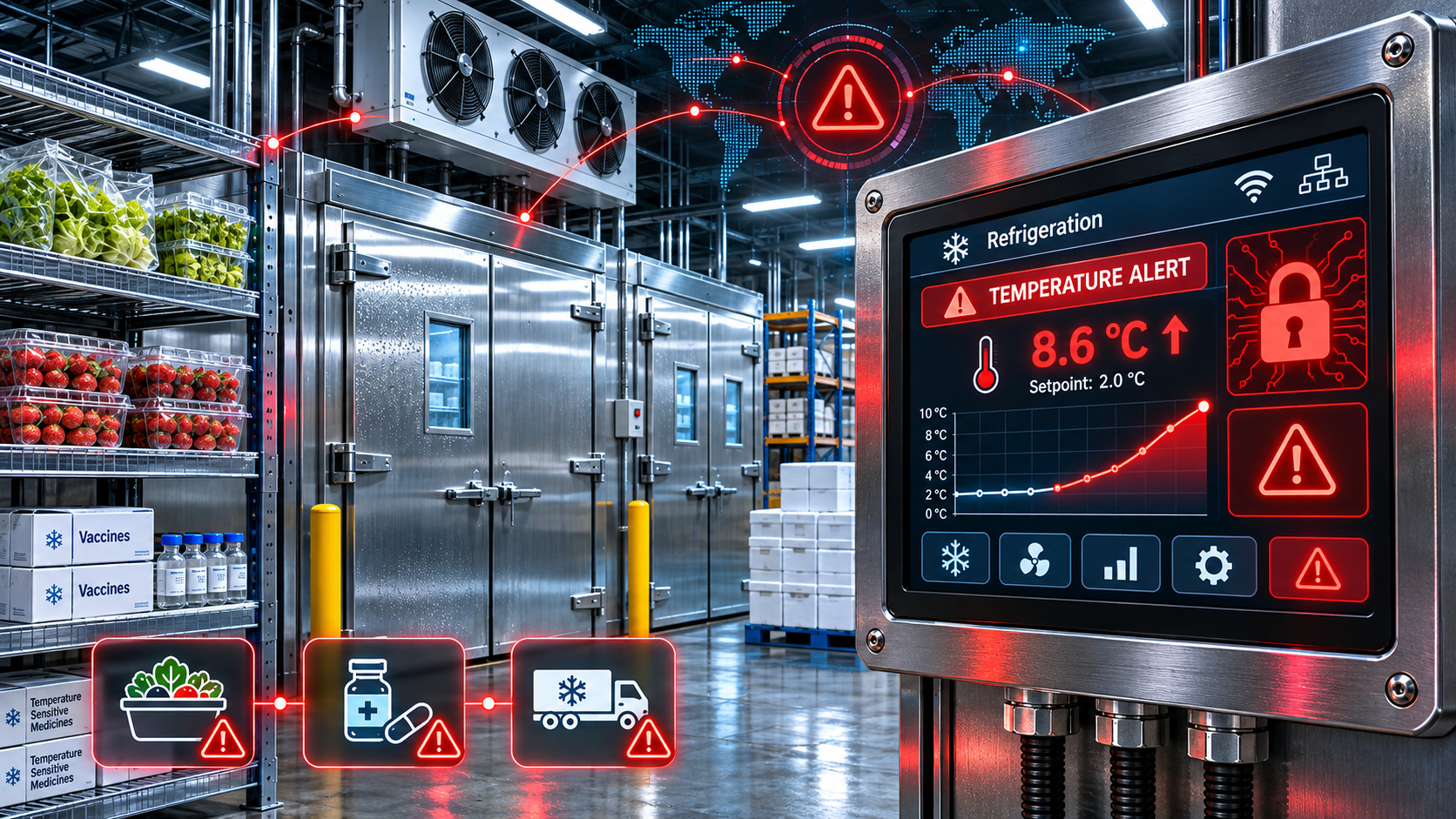


A refrigeration system failing because of a mechanical problem is an operations incident. A refrigeration system failing because someone changed its temperature over the internet is a cybersecurity incident with the same physical consequences.
That distinction matters. Inventory can be destroyed without ransomware, data theft, or a visibly compromised laptop. The equipment can appear to be running while its temperature controls have been changed or its monitoring has been disrupted.
On November 5, 2026, CISA, the FBI, and the U.S. Departments of Health and Human Services, Agriculture, and Transportation issued a joint warning about ongoing malicious activity targeting industrial refrigeration and cold-chain monitoring systems. Their message was directed at grocery stores and cold-storage operators, but the exposure extends to healthcare, food and agriculture, chemical operations, and temperature-controlled transportation.
What happened to industrial refrigeration systems?
According to TechCrunch's November 5 reporting, separate waves of attacks affected commercial refrigeration systems in European countries, with stores reporting spoiled food after attackers manipulated temperature settings. Reporting also described an attempted attack against a French blood service; its intervention prevented reported loss of blood supplies. U.S. military refrigeration systems have also come under investigation.
The federal advisory identifies a simple but serious exposure: electronic temperature controllers and commercial refrigeration controllers that are unpatched, improperly configured, or directly reachable from the internet. Attackers may exploit weak configurations, authentication bypasses, or software vulnerabilities to change settings or force continuous heating and defrost cycles.
There is a second risk beyond changing a number on a display: a compromised system can also deny operators a reliable view of the actual temperature. If monitoring is affected, the operations team may not realize that the cold chain has been broken until products are already unsafe.
Why this is bigger than a supermarket problem
Organizations increasingly connect operational technology to networks for remote maintenance, energy management, continuous monitoring, and vendor support. Those capabilities are useful. But they can also create a route from the public internet to a device that physically changes the environment around it.
The outcomes are not limited to a help-desk ticket. A refrigeration compromise can mean lost stock, disrupted deliveries, regulatory scrutiny, unusable temperature-sensitive medicines, damaged equipment, or potential safety hazards. Unlike ordinary IT downtime, some of these losses cannot be reversed after service is restored.
The question is not whether a controller contains customer data. It is whether someone who should not have access can alter a physical process that the business depends upon.
What CISA and the FBI are telling operators to do
The agencies' joint fact sheet provides specific security measures. We would translate them into the following priority order for a business operating refrigerated facilities or temperature-controlled equipment:
- Find every controller and exposed management interface. Build an inventory of refrigeration controllers, monitoring gateways, vendor connections, firmware versions, owners, and remote-access paths. Identify anything reachable from the public internet.
- Remove direct internet exposure. Controllers and control panels should not be internet-facing. Where remote support is essential, place access behind appropriately secured gateways or firewalls and tightly limit who can connect.
- Replace default and shared credentials. Use unique, strong credentials and phishing-resistant multifactor authentication wherever supported, especially on remote-access services. Review dormant contractor and vendor accounts.
- Separate operational technology from business systems. Use dedicated OT network segments and restrict network traffic so a compromise on a workstation or a third-party connection cannot automatically reach equipment controllers.
- Patch what can be patched; plan replacements for what cannot. Work with the equipment vendor to identify supported firmware and known weaknesses. Retire end-of-support devices where feasible, and document compensating protections where replacement cannot happen immediately.
- Limit what changes are technically possible. Apply allowlists for approved administration sources, reasonable setpoint boundaries, and alerts for unexpected changes. Where feasible, maintain an independent temperature monitoring and alarm path.
- Prepare for recovery and evidence collection. Maintain tested offline or offsite backups of configurations, preserve controller and network logs where available, and establish procedures for manual intervention, inventory assessment, and vendor escalation.
The important point is to address both access and consequence. Blocking remote entry is a first line of defense. Safe setpoint limits, independent monitoring, and practiced operational fallback reduce damage if that first line fails.
The AI attack surge is a separate warning
There is another development worth paying attention to. In reporting by NBC News, executives from Mandiant, CrowdStrike, and Kroll described a surge in demand for emergency cybersecurity services as attackers increasingly use AI to automate parts of their operations. Some response providers reportedly have had to turn away victims.
That reporting does not establish that AI was used in the refrigeration attacks. It highlights a broader operational problem: organizations should not assume they will be able to find immediate outside help after an incident is already underway. Incident contacts, restoration procedures, vendor escalation routes, and decision-making authority are worth arranging before the alarm sounds.
What leadership should ask this week
If your organization depends on industrial refrigeration or cold-chain monitoring, ask your facilities, engineering, IT, and security leads three questions:
- Which temperature controllers can be reached remotely, and who can change their settings?
- How would we detect an unauthorized temperature change if the primary monitoring platform were also compromised?
- Who makes the call to isolate a controller, move or quarantine inventory, and notify the right operational stakeholders?
If those questions do not have clear, documented answers, the issue is already a business risk. You do not need to wait for an incident to justify closing the exposure.
How Framework Security can help
Framework Security helps organizations identify and reduce cybersecurity risk across business systems, connected infrastructure, and operational environments. For organizations with cold-chain exposure, the starting point is practical: understand what is connected, validate remote access, prioritize the devices that could produce physical or financial harm, and build a remediation plan operations can execute.
Cybersecurity does not stop at the corporate network. When the system controlling a freezer is connected, its security is part of inventory protection, safety, and business continuity.
For more information about our risk assessment and exposure-management services, visit Framework Security.
Sources: U.S. federal joint warning, November 5, 2026; joint federal technical fact sheet; TechCrunch; NBC News.




Talk With A Cybersecurity Expert
Bring the deadline you're staring at, the framework you're being held to, and the team you have. In 30 minutes we'll tell you honestly whether we're the right fit — and if we are, what the first two weeks look like.
Book a working session