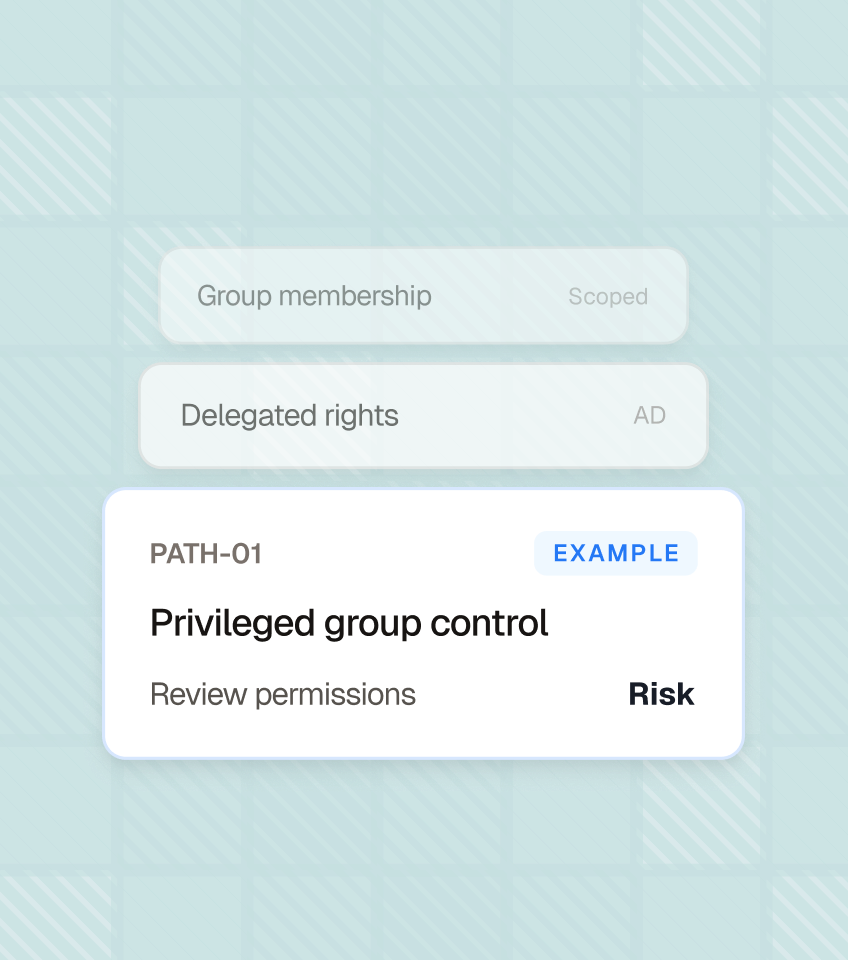
See who can reach critical systems.
Identify accounts, groups and roles with paths to privileged control in your scoped identity environment.


Permissions can give a stolen login more reach than anyone intended. Minerva Shield maps paths to privileged control in your identity environment, so your team knows which relationships to address first.







Connect permissions, accounts and applications to the systems that matter most.
See the identity paths your team should investigate first.
Identify accounts, groups and roles with paths to privileged control in your scoped identity environment.
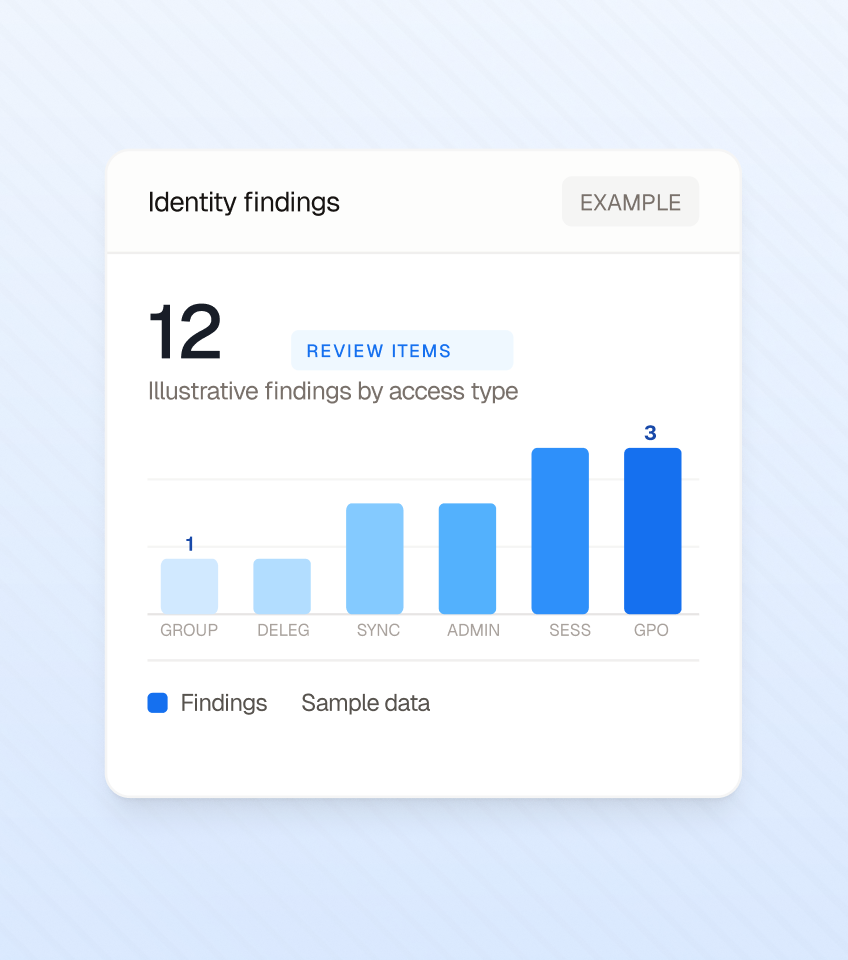
Connect permissions and relationships to see how one compromised account could gain greater access.
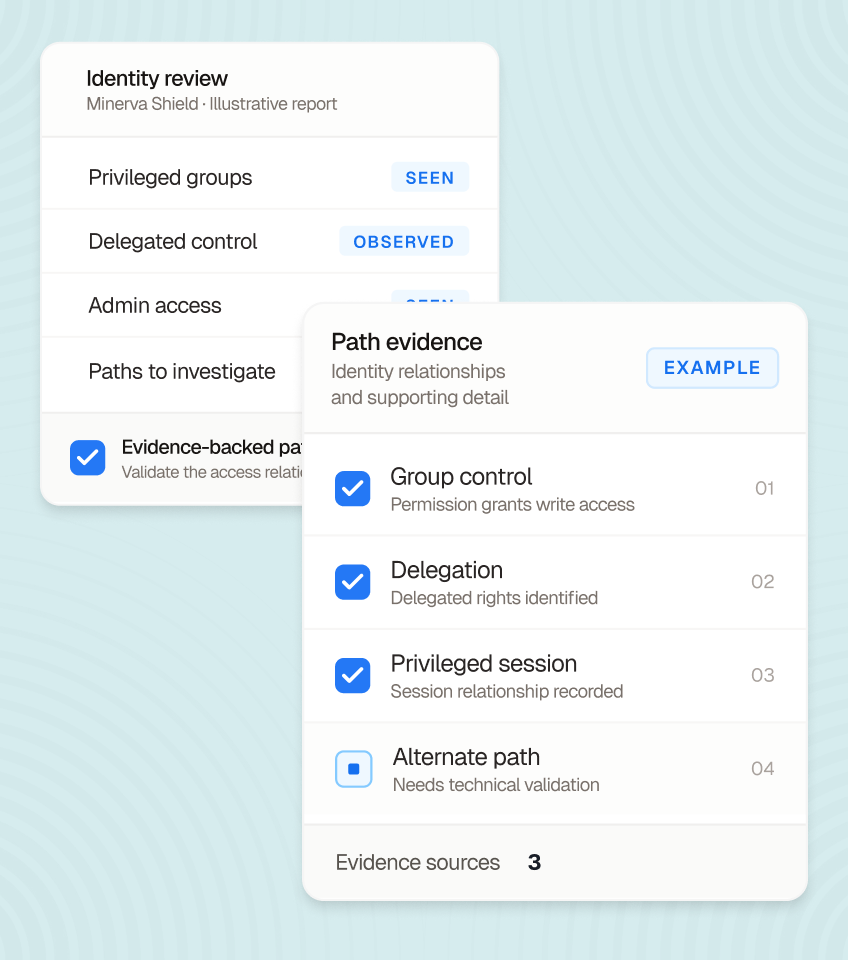
Review the misconfigurations behind the paths, with evidence to guide validation and remediation.
Your team needs to understand which access relationships create risk—and where a change could interrupt a path. Shield brings those connections into a prioritized report.
Understand the identity exposure and the attack chains that deserve attention, without having to interpret a permissions graph.
Follow the accounts, groups and permissions involved in each reported chain. Give technical teams the context to validate the finding.
Focus the next review on the permissions and misconfigurations behind the paths, with recommendations to guide your team.
A standard account can modify a privileged group. Review the permissions creating this path.
Framework Security agrees the identity scope with you, analyzes collected directory data and helps your team interpret the results.
Agree which Active Directory or Azure identity environment to review, the data collection requirements and the systems that matter most.
Build the relationship graph, identify privileged targets and examine the access paths and misconfigurations that connect to them.
Review the findings with Framework Security and decide which permissions or configurations your team should investigate and change.
Use Shield when you need to understand the consequences of accumulated permissions, delegated administration and application access.
Shield analyzes Active Directory data collected with SharpHound or Azure identity data collected with AzureHound. Each environment is assessed in a separately scoped analysis.
Shield analyzes relationships in the supplied data. A reported path is a basis for validation and remediation planning; it is not proof that an attacker has used it.
The assessment produces findings and recommendations. Your team can use them to plan changes with Framework Security; analysis does not automatically remove access.
Findings reflect the collected directory data. Agree collection timing and any follow-up assessment around changes to your environment.
MINERVA SHIELD
Talk through your identity environment with Framework Security. We’ll help define a Shield assessment around the access that matters to your business.
Senior-led, embedded cybersecurityfor regulated teams.